
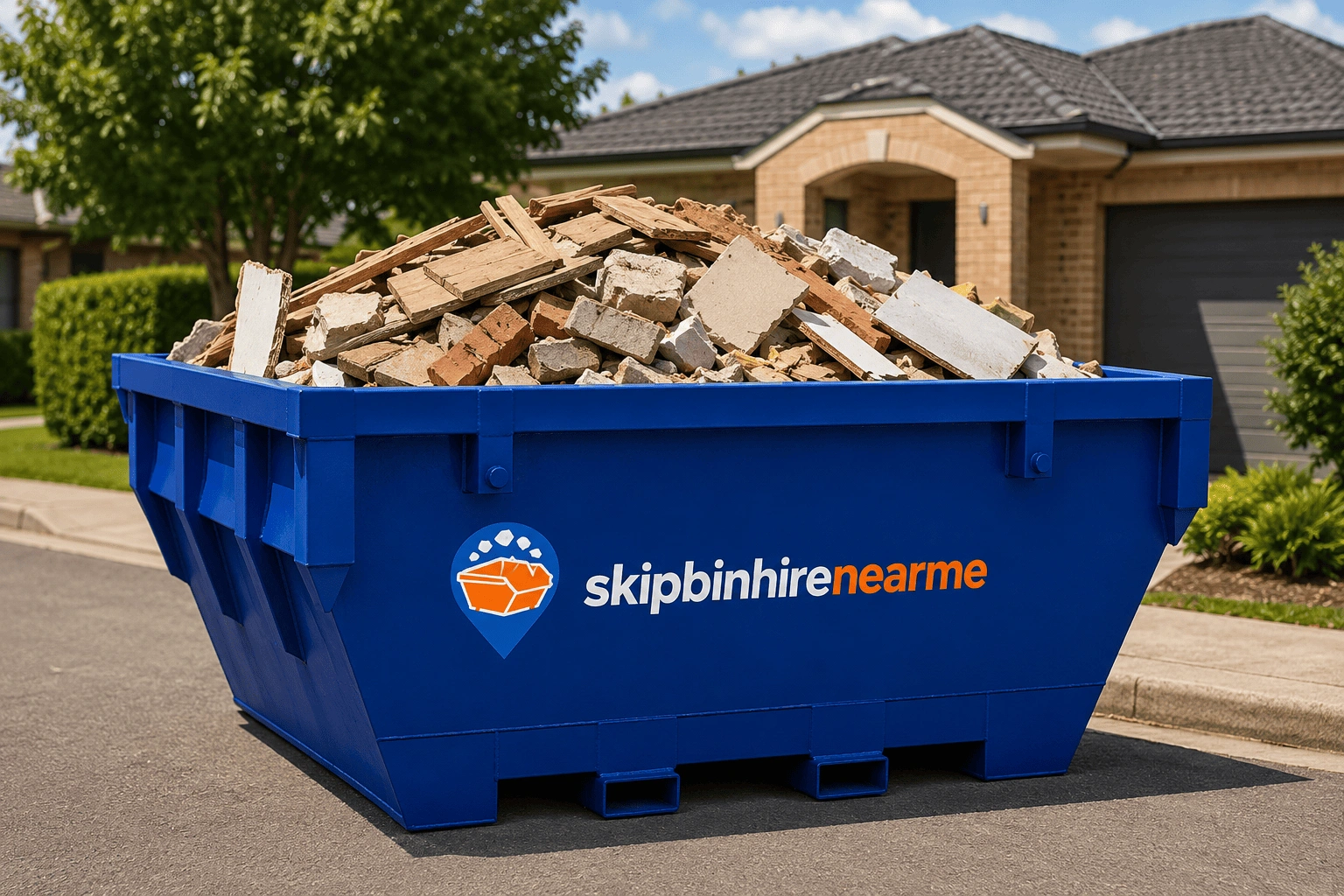
Knowing what can and cannot go into your skip bin helps you choose the correct waste type, avoid unexpected issues and ensure your waste can be collected safely.
Skip Bin Hire Near Me can assist with a range of household, garden, renovation, construction and commercial waste across our Melbourne service areas.
Waste acceptance depends on the type, weight and combination of materials you need to dispose of. If you’re unsure about anything, contact us before placing it in the bin.
Depending on the waste category arranged with your booking, skip bins may be suitable for common materials from:
It is important to tell us what you intend to dispose of when requesting your quote. Different materials can have different loading, weight and disposal requirements.
General waste skip bins are useful for household clean-ups, decluttering and property clear-outs involving common non-hazardous items.
Depending on your booking, typical items may include:
General waste typically means ordinary non-hazardous waste from homes or properties that does not require specialist handling.
Some heavy, hazardous or restricted materials cannot simply be treated as general waste.
If your load contains building materials, soil, concrete, chemicals or anything you are unsure about, tell us before booking.
Skip bins can be a convenient option for waste generated from gardening, pruning, landscaping and property maintenance.
Depending on your booking and the materials involved:
Yes. Garden and green waste can be placed in an appropriate skip bin, subject to the waste arrangement confirmed with your booking.
Do not assume soil, rocks or other heavy materials can be mixed with a green-waste load.
These materials have different weight and disposal requirements. If your garden or landscaping project includes:
call us before booking so we can confirm the appropriate option.
Renovations and building projects can produce several different types of waste. The correct skip bin depends on both the volume and material type.
Depending on the booking arrangement, construction or renovation waste may include materials such as:
Some construction materials are particularly heavy and need to be discussed with us before booki
The right size depends on your project’s waste volume and materials.
As a general guide:
A larger bin is not automatically appropriate for heavy materials.
Heavy materials need extra consideration because skip bins are limited not only by volume, but also by safe transport weight and disposal requirements.
Examples of materials that may be considered heavy include:
Some heavy materials may be handled through an appropriate skip-bin arrangement, but material, loading and weight restrictions can apply.
Do not load significant quantities of heavy material into a bin without confirming the waste type with us first.
Concrete may require a specific waste and bin arrangement because of its weight.
If you have concrete to remove, tell us:
We can then confirm whether an appropriate option is available for your project.
Do not load concrete until your booking has been confirmed for that material.
Soil is a dense, heavy material and may require a different arrangement from standard household, green or mixed waste.
If you need to dispose of:
contact us first so we can confirm the appropriate waste arrangement.
Certain materials can be hazardous, restricted or require specialist disposal and should not be placed in a standard skip bin unless specifically approved.
Examples can include:
This is not an exhaustive list.
If you are unsure whether an item is allowed, contact us before placing it in the bin.
Do not place suspected asbestos into the skip bin.
Asbestos requires specialist identification, handling, transport and disposal procedures.
If you encounter a material you suspect may contain asbestos during a renovation, demolition or property clean-up, keep it separate from the skip-bin load and arrange appropriate specialist advice.
Waste must be loaded safely and kept within the permitted fill level of the skip bin.
Do not:
An overloaded or unsafe skip bin may need to be adjusted before it can be transported safely and may result in additional arrangements or charges.
A skip bin can run out of safe carrying capacity before it runs out of physical space when it contains dense materials.
For example, a large skip filled with lightweight bulky household items is very different from the same bin filled with concrete, soil or masonry.
That’s why we ask about your waste type as well as the amount of waste when recommending a bin.
Mixing different materials can change how the load needs to be handled.
For example, adding:
may affect the appropriate waste category or collection arrangement.
If your project will generate several types of waste, tell us when requesting your quote.
After collection, waste is transported to approved waste-management or recycling facilities for appropriate processing.
Where possible, recyclable materials are recovered from suitable waste streams to help reduce the amount of waste sent to landfill.
The actual recycling outcome depends on the type, condition and mixture of materials in each load, so we do not publish unsupported recycling percentages.
Use this quick guide as a starting point:
| Your Project | Likely Waste Category |
|---|---|
| Household decluttering | General / household waste |
| Moving or property clean-out | General / household waste |
| Garden pruning and yard clean-up | Green waste |
| Home renovation | Renovation / construction waste |
| Building project | Construction waste |
| Office or shop clean-out | Commercial/general waste |
| Concrete, soil, rocks or dense material | Contact us before booking |
| Hazardous or restricted material | Do not load – contact us first |
Your exact waste arrangement should be confirmed when booking.
If you’re unsure whether something is allowed, don’t guess.
Tell us:
We’ll help you work out the appropriate waste and skip-bin option.
Skip bins can accommodate many common household, garden, renovation, construction and commercial waste materials. The exact materials accepted depend on the waste category arranged with your booking.
Hazardous, dangerous or restricted materials should not be placed in a standard skip bin unless specifically approved. Examples can include asbestos, chemicals, gas cylinders, flammable materials and other regulated waste.
Yes. An appropriate skip bin can be used for common garden and green waste. Tell us if the load also contains soil, rocks or other non-green materials.
Do not mix soil with green waste without checking first. Soil is much heavier and may require a different waste arrangement.
Concrete may require a specific bin and waste arrangement because of its weight. Contact us with the approximate quantity before booking.
Sometimes different materials can be accommodated, but mixing waste can affect the applicable waste category. Tell us exactly what your load contains when requesting a quote.
No. Waste should remain within the permitted fill level so the bin can be transported safely.
The correct size depends on both waste volume and waste type. Our range extends from 2m³ to 12m³, and we can help you select an appropriate option.
Tell us what you’re removing and we’ll help you determine the appropriate skip bin before you book.